Showing posts with label Chapter 10. Show all posts

Monday, May 17, 2010

Group Dynamics

Chapter 10 on group dynamics is a very important chapter for everyone to read and make note of. Working in teams successfully is one of the most important skills for anybody to learn. One checklist of sorts, is Tuckman's model. Tuckman provides a 5 step model to follow to successful progress in a group or team. His model is: Forming, Storming, Norming, Performing, and Adjourning. The stages are described in the book like this, "How do I fit in?, What's my role? What do others expect of me?, How can I best perfume my role, and What's next?" His original model had only four points, and adjourning was added later.

This model has been used by many since 1965, so much so that it seems to be more common sense than a theory. I think it is a good model to follow. It addresses the process needed to get tasks done in a group. In groups, if one were to follow this, I believe that the group as a whole would benefit. If used properly, the model can help prevent conflict and confusion on roles and everything as a whole.


J Welch ans S Welch, "From the Old, Something New," BusinessWeek, p 124

Friday, May 7, 2010

ch 10

In chapter 10 it talked about Groups and social networking and how it all starts with 2 or more people freely interacting sharing goals and collecting ideas, then realizing they both share a common identity. As I was reading this chapter it made me realize some of the groups that I am currently in here at school. I also feel that it was easier for me to be in my group because before I came here I played a sport and it a common and quick ice breaker for you to become in a group. Then I thought about being in an all athletic group and a business as my major and how much networking you do. The chapter then talked about women facing an uphill battle in mixed gender task groups. I found an article and video of how that the Navy is now letting females on the submarines for the very first time now.
http://news.yahoo.com/video/us-15749625/first-women-chosen-for-sub-duty-excited-19605966

Wednesday, April 21, 2010

Threats to Group Effectiveness

A section titled, “Threats to Group Effectiveness,” on page 295 is very informative and relevant. It caught my attention because group effectiveness is vital to success and I wanted to understand what factors could threaten it. This information is relevant to nearly every situation which has a group at its core.

The three threats to group effectiveness mentioned in this section are the Asch effect, groupthink, and social loafing. Out of these, I found the Asch effect to be most interesting. The Asch effect deals with perspective and is named after a psychologist who studied group dynamics. He conducted an experiment which people would have to match the length of one line with one of three others on a separate card. Because there was only one correct choice, the results should have been unanimous, but they weren’t. This is because Dr. Asch arranged to have one of the participants offer up incorrect information, and under pressure, other people followed.

I have witnessed this effect occur several times when working in a group, yet didn’t understand the context until now. What may appear to be consensus might actually be the Asch effect in disguise.

Sunday, April 11, 2010

The Five Stages

Tuckman's five stage theory was discussed in class and we were encouraged to use this model in our endeavors as a group while synthesizing our individual interviews. The first stage is pretty simple and straight forward because that is the step we take in every new relationship and that is getting to know each other, and "breaking the ice" which is referred to as the forming stage. This is where ideas and goals begin to formulate. The second stage is the "storming" stage where roles have been assigned and a lot of risks are being taken between the group in order to test limits and draw boundaries. The third stage is "norming" is reached after the group has successfully passed stage 2 thanks to having a good leader, and the fact that group members are getting along. In this stage every member is comfortable with their role, and "group cohesiveness" which involves are members being on the same page, and a sense of belonging. The fourth stage is "performing" where the problems have been converted into resolutions due to members voicing their opinion and being comfortable discussing with each other and resolving conflicts together. The final stage is "adjourning" in which the desired goals have been reached and all tasks have been accomplished. Due to the limits placed on groups the "adjourning" stage is extremely important. However if this process is not successful it can damage the relationship between group members and thus causing chaos in the workplace.

Monday, March 29, 2010

Five Stages of Group Development

Chapter 10 discusses Group Dynamics. The chapter opens with a brief discussion of networking, and goes into detail of what social networking is and how it is expanding across the globe. The section that I found most interesting in Chapter 10 however, was the Five Stages in Tuckman's Model. Bruce W. Tuckman was a psychologist who created a five stage process of group development in 1965, in order to summarize the human process of creating groups and teams.
The first stage of Tuckman's Model is forming. This initial step involves the group members to "break the ice" and get to know one another on a personal level. This is to make group decision process easier. This period is where you will find group members anxious to find such things as their roles in the group, and who is in charge.
Stage two is Storming. During this stage, members test the leaders policies, and try to determine where they individually fit into the "power structure" (Stages of Team Development). The biggest issue to overcome during this stage is the power struggle, along with coming to an agreement who is in charge.
The third stage is norming, where "rules, values, methods, and tools are established" (Stages of Team Development). This stage is where the identity of the group begins, and they can begin to work together.
The fourth step, performing is where all the planning and preparation finally gets put to use. This is a vital stage where group members should focus on solving task problems.
The last step, is adjourning. This is when the work has been completed. The group comes together and discusses the issues of the wok performed. Then the group "disassembles" and some feel a sense of loss after noting all the work they put into the project.

"Stages of Team Development." 12 Manage. The Executive Fast Track. 3/29/10. .

Sunday, March 21, 2010

Group Development

Tuckman's Five-Stage Theory of Group Development was discussed during class and is an important concept to understand for successful group work. The first of the five stages is forming which is usually where "ice-breaker" activities are used. Learning your intended goal, understanding the project and time-line are all included in this stage. Storming is the second stage where the roles within the group are defined and testing the other members boundaries to feel comfortable. The third stage is norming where group cohesiveness is most apparent and the challenges of testing the waters has passed and now owning the roles the team members have taken. Finally the performance stage where problems are solved. Open communication, respect, constructiveness is important within a cohesive work group. Lastly is the adjourning stage where tasks have been completed and accomplishment has been established. This final stage is extremely important because groups often have time limits. If a team is together for too long of a period the stages can go in reverse disrupting the harmony within the workplace. Any type of group can be affected by these stages including active, project, production, advice teams and even friendships.

Saturday, March 20, 2010

Social Dynamics? In MY workplace? BAH!

Chapter 10 is about the one thing in this world I cannot properly grasp: Social Dynamics.

There are so many things at play in the ways that people communicate and interact, it's enough to make a man crazy. Chapter 10 of our fun-filled-fantasy romp through la-la land Organizational Behavior, by none other than our friends, Kreitner and Kinicki, spells out a dizzying array of how organizational social interactions are formulated and maintained. This chapter covers everything from expectations and group pressure to team size. There are two things in this chapter that really caught my eye, though- the concept of social currencies, and Bruce W. Tuckman's five-stage group development process.

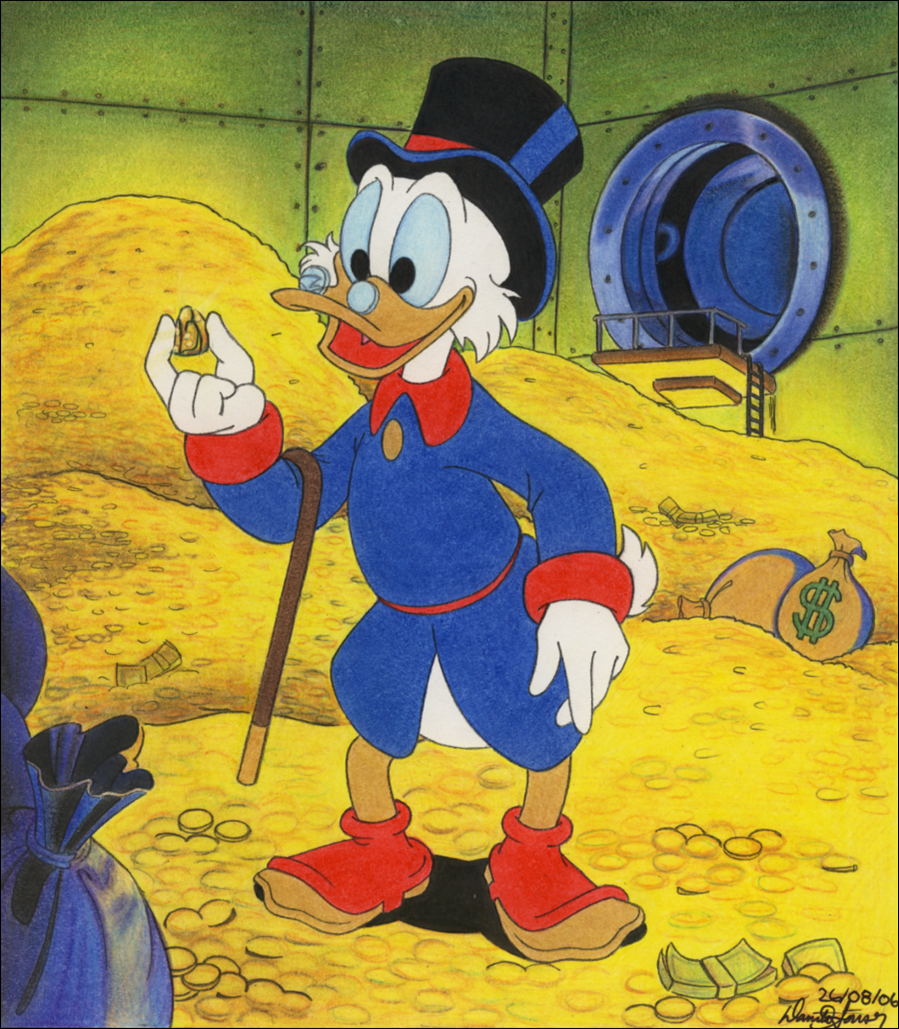
When you think about it, there's no social currency like money (or Duck Tales)
(Image courtesy of stormstrike.files.wordpress.com)

In this case, there are currencies that you and your organization exchange in any and all interactions. Of course, there's the reason most people work, which is money. You exchange your time and skills for a paycheck. That's one kind of currency exchange, but you also exchange your loyalty, positivity, good performance, and other things with your job in exchange for advancement, benefits, continued employment, and other things. You exchange your assets as currency for their assets, which you probably want. How you "pay out" your currency (if you do at all), has a profound impact on how you are perceived within the group and the organization as a whole.

This is a two-way street. If the organization is giving you what you perceive to be a lower value of exchange than you feel you deserve, you will likely give less to make the exchange feel more "equal" in your mind. Conversely, if the company sees that you are giving much more value to the company than the company perceives it is giving to you, then a promotion is probably not far off. This is essentially simple psychology that I have covered in previous blog posts, but it bears repeating, due to its profound importance to group dynamics. If your group isn't giving you what you believe you deserve, you won't give as much to your group or team, and that's not a sustainable relationship.

So, how do groups develop into a collaborative environment where these kinds of exchanges take place? Some dude back in 1965 named Bruce W. Tuckman developed a theory to help explain that very process, making him one of the pimpingest educational psychologists from that decade.

Pictured: The Pimpingest
(Image courtesy of i4learnlive2.co.uk)

He broke down his theory into five stages, starting with the formation of the group and ending with the eventual adjournment of the group. I will break down the steps one by one, and give real-life examples.

Step 1- Forming
Forming is the meet-and-greet stage, where nobody knows each other. There is some ambiguity as to who is in charge and what specific group roles are in this stage. During this stage, if there is a formal leader, he'd better step up and take charge or someone else will do it for him. A good example would be a group of motorcyclists. In my time riding my motorcycle all over northern California, I have found that it's super easy to get a group together, but difficult to give that group some direction. There are roles in riding groups that need to be fulfilled. The person in back sets the pace while the person in front watches for road hazards and alerts the group behind them. Usually, the ride organizer is automatically designated the formal leader, but if their leadership is insufficient, another rider (sometimes in mid-ride) can supersede them and take charge if they detect that the group is not enjoying themselves, which is the whole point of riding.

Step 2- Storming
Storming is where group members really feel out the situation with the leader and other members. this is a trying stage for the group, because this is where power blocs are born and politics play a big role. This is the stage where members test the policies of the leader, and where they begin to figure out where they fit into the group hierarchy. Imagine a company of new soldiers fresh out of boot camp joining with their battalion in an overseas deployment. Of course, they're the new guys. Imagine that boot camp is the forming stage. Now, they need to figure out how they fit into the scheme of things by testing their leader's policies and by forming groups. The book points out that this stage can be deadly because some people will try to make power grabs, leading to conflict.

Stage 3- Norming
According to the model, groups that make it this far did so because a member of the group other than the leader stepped up to call on group members to abandon power struggles and come together to work toward organizational goals. This is the part of the equation where team spirit begins to form, and people fall into their roles. Imagine a new online publication. The new team has already formed little groups that made plays for power gains in the office structure, but a member of the office has said that this can't work anymore. All members of the group sit down, hash out the problems, reaffirm their roles, and start to view the group as the vehicle for productivity, rather than a means to an end.

Stage 4- Performing
This is where task problems get solved. The group members won't be stepping on each other's toes in this stage. The group members cooperate with each other and help each other on tasks. The group's goals are now part of each member's commitment to the activity. Imagine an assembly line, where each member counts on other members to do their job correctly. Beyond the expectation, though, is TRUST that the other members WILL do their job correctly.

Stage 5- Adjourning
Unfortunately, the project is over, and the group must disband. A group that has made it to this stage will see it's members experiencing a sense of loss. Members will naturally miss the cohesiveness of the group and the people that they met. Often, there will be celebrations of success, or somber rituals of loss. Leaders will often give talks to the group about lessons learned, great work that was done in the group, and implore group members to prepare for their futures. In this case, think about a class of students at a college. They came into the school without any knowledge of each other, what the expectations were, or what their roles would be. Some of them made power plays in various extracurricular activities like sports and student government, but advisors and teachers were the primary supervisors that they reported to. The students form small groups and play for power (in this case, popularity is a big one). They then grow up a little, reaffirm their roles as students and not partying alcoholics, and everyone starts working together, sometimes forming study groups and other such things that help toward the common goal of graduation. In the end, they graduate, and the group dissolves.

Monday, March 15, 2010

Group Sizing: Effective or Not?

What stood out to me in this chapter is the discussion about group sizing. As a manager, determining group size is essential to whatever objective you are trying to accomplish. A meta-analysis of eight studies showed: "as group size increased, group leaders tended to become more directive, and group member satisfaction tended to decline slightly" (Kreitner 285).

In a laboratory simulation of group behavior, Bottger and Yetton discovered that to maxamize decision quality, groups should be comprised of no more than 5 members. For objectives other than decision-making, larger groups may prove to be more useful. Although group size is ultimately up to the manager, it is recommended that odd numbered groups are more effective in decision making. Group size can determine the overall performance at hand.

I find this particularly true in the groups I have worked with in the past. The smaller, more intimate groups are usually more straight-forward. The larger groups are more useful in discussions because there are many opinions and perceptive offered.

Source: Yetton, Philip, and Preston Bottger. "The Relationships among Group Size, Member Ability, Social Decision Schemes, and Performance." Organizational Behavior & Human Performance 32.2 (1983): 145-159. Academic Search Complete. EBSCO. Web. 27 Feb. 2010.

Role Overload

Role overload is something that we, as students, are very familiar with. Between school, our families, our friends, and sometimes even work, there are times that 24 hours a day is not enough. In my own experience, I agree with what the book said about role overload. The book said that the more things we do per day, the more stressed we get, and the personal efficacy lessens. Being a student, an eldest sibling in my family, trying to have a social life, and trying to find work, I found out that there are times that I find myself lacking in some roles. For example, to be able to relax and spend time with friends, I have to give up doing my homework at an early time. When this happens, I end up falling asleep or just putting off homework for the next day.

I always thought though that role overload would be one of the major stressors in a person’s life. I was shocked after coming across this study. According to a study named “Role Overload, Role Conflict, and Stress: Addressing Consequences of Multiple Role Demands” by Shelley Coverman, though role overload does play a role in giving a person stress, it was not something major. “The weakest effects observed in the model involved role overload. These effects tend to be small and inconsistent, suggesting that time expenditures do not strongly influence stress levels.” (p.978) Interestingly enough, things like marriage problems or employment problems ranked higher than the overload.

Source:
Coverman, S. (2989). Role Overload, Role Conflict, and Stress: Addressing Consequences of Mutiple Role Demands. University of North Carolina Press , pp.965-982.

Sunday, March 14, 2010

Five Stages

The psychologist Bruce W. Tuckman came u with a four stage model for group development process. Ten years later Tuckman and a doctoral student added a fifth stage. The stages are forming, storming, norming, performing, and adjourning. Today most people in the OB field follow this model as if it were a fact, however, it is still just a model. The different stages are not of the duration or intensity. Stage one, forming, is when people are still uncertain about their roles in the group and what to expect from the group. people usually hold back and don't give all their ideas or act completely themselves. Eventually, someone will step into the leadership role and get things started. Stage tow, storming, is when people test the leader and see what will be tolerable and will not be tolerable. Subgroups usually form and little rebellions take place in this stage. Most groups stall in this stage because the little rebellions become big rebellions. Stage three, norming, is when the group as a whole sits down and resolves any problems it might be having. It takes someone besides the leader to step up to begin this stage. This is the stage where group cohesiveness is gained. Stage four, performing, is when the group is working its best. people know their roles in the group and thanks to stage 2 there is now open communication among members. The final stage is adjourning. This is where the work is done and the members go back to being independent. It is also the stage that the leader tells everyone what lessons were learned while working together.
I also did some more research and found a site that went into more detail about the five stages and assesses them. It also talks of how Tuckman came u with the model.

Smith, M. K. (2005) 'Bruce W. Tuckman - forming, storming, norming and performing in groups, the encyclopaedia of informal education, www.infed.org/thinkers/tuckman.htm.

Friday, March 12, 2010

Social Loafing

Social loafing is a factor that is apparent in many group projects. Social loafing is when an individual chooses to put forth less effort as the group size increases. Social loafing can affect group effectiveness and synergy. Laboratory studies show theories of why social loafing is present in group environments. The three theories is that “the task is perceived to be unimportant, simple, or not interesting, group members thought their individual output was not identifiable, and that group members expected their coworkers to loaf.” Management techniques can avoid social loafing to be present within a group. In addition, the stepladder technique can rid social loafing by increasing each individual’s personal effort and their accountability.

In the article, “Social Loafing” provides additional ways to prevent social loafing in groups. In addition to increasing accountability, peer evaluation or writing a team contract will allow team members to put forth effort. It is important to identify who will implement these measures for the group. “A functional manager will not have sufficient authority due to the fact that team members can be from different departments.” Using a project manager or team leader will allow this approach to be efficient because they will have basic knowledge of organizational behavior. What I learned from this article is that the key to avoid social loafing is not to develop a sense of community in the group, but to define individual tasks.


Kreitner, Robert. Organizational Behavior. 9th ed. Vol. 1. New York: McGraw-Hill Irwin, 2010.

Organizational Behavior and Leadership E-zine. 2 Sept. 2009. Web. 12 Mar. 2010. .

Thursday, March 11, 2010

Social Networking Too Social?

Almost everyone nowadays participates in Social Networking, whether it be through facebook, myspace, or even Blogger. In the past people would confide in their friends their true feelings about their jobs or the events of their days and were confident that their friends would keep their secrets or stories to themselves. There was such a thing as after-hours, freedom from the workplace. However, nowadays when you post your thoughts on your site, expecting that only your friends will see them, sometimes word spreads and oftentimes has negative consequences. Many people have been fired due to information that was gleaned from their choice networking site. People can no longer take 'sick days' in order to get some necessary housework done or go on a field-trip with their kid.. or at least they can, but they cannot spread the word about their actions to their friends. Everything that is posted must be carefully considered. Some complain that the negative career effects of social networking sites are a violation of their freedom of speech. They posted or commented something after office-hours, so what they say or do should have no effect on their career in a company. People have been fired for simply stating that they were bored at work that day. I find this ridiculous.

As long as people do not write slander about their company or the people they work with, they should be able to post such feelings freely. If managers were smart, they would even encourage such action because they could use the information to better their work environment and organization. If their employees are bored or feel they have no purpose, then it is the manager's duty to shake things up a bit and give purpose to their work so that they can feel pride in what they do and be motivated to do what they do well. In this way, the employees are content and business prospers. Social networking should be viewed as just that, social, not professional. Social networking can be a good part of the feedback loop if freedom of speech is encouraged. Companies need to realize that their employee's lives do not always revolve around their work. Not even the CEOs of companies are purely motivated to live because of their job. They have other interests as well. Such interests need to be taken into account and encouraged so that people will be able to function to the best of their ability everyday at work. When people are satisfied with other areas of their life, then their outlook is much more positive and their energy level increases and they are able to be top company performers.

Source:
Breslin, Tom. "When social networking enters the workplace." Massachusetts Nurse 80.8 (2009): 14. Academic Search Complete. EBSCO. Web. 11 Mar. 2010

Monday, March 8, 2010

Chapter 10: Tuckman's Theory of Group Development

In Chapter 10 the part that resonated with me the most is Tuckman's Theory of Group Development, which is a non-sequential model that groups use when they come together and begin to work as a team. There are five main steps he speaks about which are forming, storming, norming, performing, and adjourning. These five steps seem to be essential factors in helping a team build trust and a strong relationship among each other. As a result, it becomes easier for groups to accomplish tasks and be productive in the assignments they are given.
An example is an article written by Despina Potari, which is methodologically based, and is addressing the study of mathematics group teaching in a middle school setting. It goes about using teaching activities and using in order to go about using team work in which classroom teaching is situated. Theoretical and methodological approaches are illustrated through episodes from a group study of the mathematics teaching and learning in a Year-10 class in a UK secondary school where students were considered as “lower achievers” in their year group. It show how a number of questions about mathematics teaching and learning through group work among the students helps them excel in their school work. In addition, this framework provided a way to address complexity in the activity of teaching and its development based on recognition of their work in teams in mathematics teaching–learning.

source: Jaworski, Barbara, and Despina Potari. "Bridging the macro- and micro-divide: using an activity theory model to capture sociocultural complexity in mathematics teaching and its development." Educational Studies in Mathematics 72.2 (2009): 219-236. Academic Search Complete. EBSCO. Web. 8 Mar. 2010.

Saturday, March 6, 2010

Tuckman's Theory of Group Development

Chapter 10 discusses Tuckman's 5 stage theory of group development. The five steps are forming, storming, norming, performing, and adjourning. Each step is critically important in ice-breaking, integrating opinions, group cohesiveness, solving task problems, and celebrating a job well done. If all the group processes do not occur, the group may not be fully mature or effective, resulting in decreased productivity and results. Each individual member also goes through this development process, overcoming various personal issues as related to the entire group. This might include realignment of values with the group's, increasing motivation, or overcoming job challenges.

Tuckman's theory as discussed in Exploring Leadership: For College students who want to make a difference," is described in terms of the relationship leadership model. The Relational leadership model defines leadership as dependent on the relationships we have with others. The book displays aspects of the model that might help the group successfully deal with each stage of its development. For example, in forming the group leaders must "be inclusive and empowering. Make sure all the shareholders and stakeholders are involved. Seek diverse members to bring talent to the group. Model the processes of inclusion and shared leadership. Identify common purposes and targets of change" (Komives, 221). Although the OB text goes into leadership in later chapters, Exploring Leadership provides insight into group development's and Tuckman's relationship with one style of leadership.


Komives, Susan R. Et al. Exploring Leadership. John Wiley and Sons, Inc. San Francisco: 2007.

Kreitner, Robert. Organizational Behavior. 9th ed. Vol. 1. New York: McGraw-Hill Irwin, 2010.

Friday, March 5, 2010

Chapter 10

In this chapter, the book talks about roles and the different sections. These sections include: role episodes, role overload, role conflict, and role ambiguity. The section that stood out the most to me is role overload. Role overload seems to be something that a lot of students seem to be feeling these days, especially college students. Role overload is defined as ‘the total sum of what role senders expect of the focal person far exceeds what he or she is able to do.’ I’ve noticed that this tends to happen a lot to us, especially during midterms and finals week. We, as students, are overwhelmed with having to study, hold a job, and commit to a club or sports team. The expected roles of us to be students, employees, and active participants in sports or a club sometimes exceed our limits of handling those responsibilities. On top of those roles, we also have a social life role to fill as well. In order to overcome or avoid role overload, students should better manage their time by weighing which roles are more important for that particular situation and time. It sounds easier said than done, but things like this take lots of practice and mistakes in order to manage it.

On a website titled, Problems at the Work-Life Interface: Role Overload, it gathered information about Canadians feelings of role overload in 1991 and 2001. In 1991, 42% of Canadians reported to feeling role overload. However, in 2001, that percentage jumped to 56%, showing a 6% increase. The sources of role overload were divided into two categories: emotional/physical fatigue, and feeling time-crunched. Emotional/physical fatigue creates role overload because the people are trying to hard to balance all the roles in their life. Feeling time-crunched occurs because people feel that they have too many things to do in such a short amount of time. This website pointed out an important idea because I’ve noticed that our society and culture has turned into one where time is so important that it feels like we never have enough of it. Because we feel like we don’t have enough of time, we spend more time working than resting which leads to emotional/physical fatigue. A lot of people want to get out of this time-crunched feeling but they’re too busy keeping up with everyone else. If this cycle were to change, it would have to start with individuals.

Works Cited
Problems at the Work-Life Interface: Role Overload. 24 December 2004. 5 March 2010 (http://www.hrsdc.gc.ca/eng/lp/spila/wlb/vcswlb/25role_overload.shtml).